Sunday, June 16, 2013

Liguria: A Layered Land

We were driving through Liguria a few days ago and my friend, Nicola, was telling stories.  As we drove on a road that wound along the sea and through mountains terraced with olive trees, he was sharing some funny stories that I swore I would not repeat, but most of Nicola's tales come more in the form of legends, little histories of this beautiful land.

And then I pointed to a cluster of houses, tucked deep into a mountainside.  I asked who lives in these houses and why.  They are almost impossible to reach.  I tried to envision the kinds of people who live here.  Then Nicola told me that if you walk in the woods you often come up houses that have been abandoned.  Whole houses, made of stones, that are crumbling to dust.

That's when he explained to me about ubago.  Ubago is a word of Ligurian dialect.  Ubago is a wet, dark place.  You can come upon it only in the deepest reaches of the woods.  Here you feel that anything can happen.  It is where you will confront ghosts and mysteries and perhaps your own demonds.  The past itself can arise.  Ubago is the forgotten.  It is the darkside.

I'd met Nicola at a conference in Genoa the previous fall.  Genoa is the heart of Liguria -  the province of Italy that abuts the French Riviera. Liguria is thought of as riviera "lite" - without Cannes or St. Tropez.  Not to mention Provence. It has none of the jet set allure and hence is less known.  Perhaps in its own way Liguria is a bit of a forgotten place.

I'd only been here once before.  With my mother decades ago.  We'd stopped in Genoa and spent a night in La Spezia.  I had been to Genoa before and once decades ago with my mother to La Spezia.

I knew little about this part of the world but when Nicola told me that his family had a four-star hotel (Hotel Caravelle in Diano Marina) and that he had his own olive grove (where he produces organic olive oil), well, it seemed like a no brainer.  We made this side trip from our vacation in Spain.

When driving through Liguria, you can't miss the terraced landscape.  Nine hundred years ago, Nicola explained, the people of this region recognized that this land had the perfect combination of rich soil and brilliant sunshine for growing olives and grapes. But it was also very difficult because the mountainous land was so rocky.  If they managed to till the land, where would they put the rocks?  So they developed a technique of creating terraces, braced with walls of stone.  To this day this is how this region is farmed.


What I'll call the layered look - of this multi-layered land.

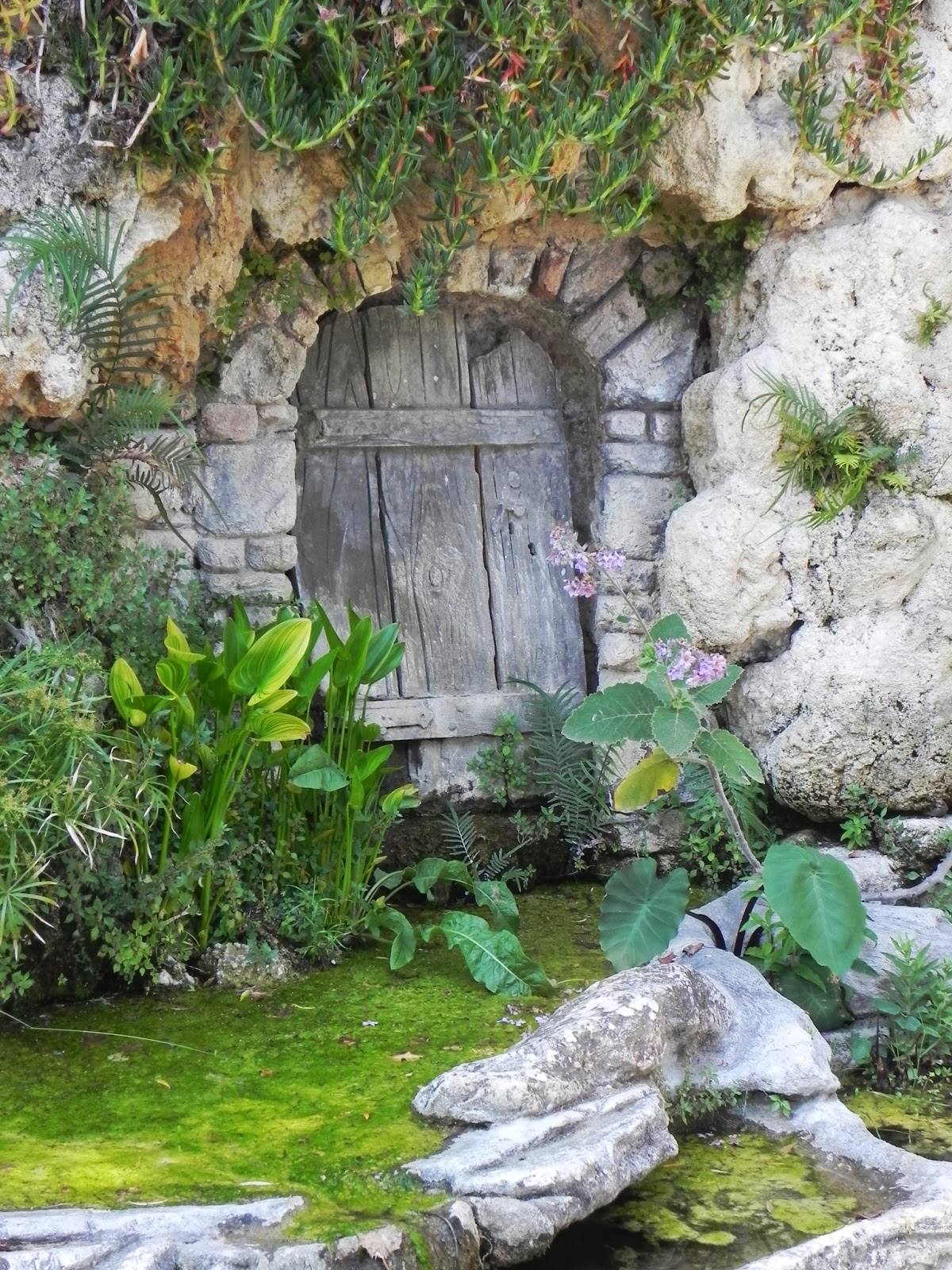
But now as Nicola was explaining to me about ubago, I got a look at another kind of layers.  Something that went beyond the mountains and the sea and the terraced terrain.  Liguria is a prehistoric place (I actually saw a prehistoric plant at the Hanbury botanic garden that had a boy plant and a girl plant whose centers weirdly evoked human genitalia).  Its beginnings were pagan  and so it still has a tradition of ghosts, and spirits, and unseen things.

The sun and the mountains, the sea and the dark side.  Olives and grapes.  Hilltowns and abandoned houses made of stone.  Prehistoric plants.  Come to Liguria and find your portal into another world.  It can be hard, I know, where everywhere you look is beautiful and mysterious at the same time.


Sunday, June 9, 2013

Shelf Life

People come to Spain and say they are searching for Hemingway´s Spain.  What exactly are they looking for beyond the bulls running in the streets of Pamplona which really is a fairly silly thing to do and most injuries and death occur because people slip in cow patties and then the bulls run over you.  (something the government prefers not to reveal).

The other day at about eleven a.m. we were getting up late and had just had a pastry and coffee, then decided to stop in a local pintxos bar.   It was filled with morning customers.  Some out on the street, smoking as they sip their coffee.  Which you know they think they should be doing inside.  Inside the room is dark, musty, with sides of ham hanging from the ceiling and little plastic cups stuck into the bottom to collect the dripping grease.  We grab our coffee and head outside and that is when I stumble upon what for me marks the real Spain.

There is a little shelf.  It´s just a small, varnished piece of wood, hammered into the side of the bar.  But this is where you can rest your beer, your glass of txacoli, your espresso as you sip on the street and talk to your friends, make out with your lover, pet a dog, hang out with your father.  It is so simple and yet it´s message is clear.  It says pause.  Take your time.  This is what it means to be alive and in the world.  No one is staring into his laptop.  There is no silence. There are just people, hanging out, laughing, jammering away.  All because of a shelf.

I began to notice them everywhere.  Almost all the bars and cafes have a window that opens to the outside and from here the barista serves you your drinks.  On nice days and rainy days these Basque and Spanish people stand outside, resting their drinks on a shelf.  I have come to covet this invention and I know once I am home I´m going to yearn for it the way I´m going to yearn for the little ceramic cups in which your morning coffee is served and not the take out styrofoam.

What is the difference bt. the culture that offers ceramic cups and little shelves and the one that doesn´t?.  The former implies a place where the goal of all of this is to talk to your friends.  The latter where the goal is to keep walking, don´t delay.  You might be late.  You´ll miss god knows what that probably didn´t matter in the first place.

So I have found my inner Hemingway in the form of this shelf.  Spain exists in its pauses, its sipping, its endless chatter.  In the country where I come from people sit in cafes, staring into their laptops.  Here solitude is for when we are alone.  The rest is for road trips and trysts and insurrections.  And having a beer or two with old friends as you rest your glass upon a little shelf.


Thursday, June 6, 2013

The Lonely Guitarist

The other day we´re coming back from lunch along the docks at LaRampa, where we´d had a little more wine, and a glass of port, than we´d intended.  We heard it´d rained in San Sebastian for all of May - the most rain in one month since 1929. And now the San Sebastians are all out in droves. The wharf is packed with children who have been cooped up for weeks, mothers breathing a sigh of relief, lovers who can lie together at last, old men in berets who take the first daily walk they´ve had since the rains began.

We wander among them, following the sea.  In first blinding bright sunny day since our arrival we come to the ancient archway that marks the entrance into the old city of San Sebastian and here we pause.  Under the arch a young man is playing guitar.  His sound is melancholic Flamenco.  It echoes through the arch and on to the docks where twenty or so people lie on park benches or on the cement docks or under trees, dozing.

Larry and I sit down as well and I put my head in his lap and proceed to drift off as the young man plays.  The music is sad, filled with yearning.  It reminds me of that Portugese untranslatable world - saudade - which I can´t pronounce either but means something like you are yearning for what was never really there.  The aching of the human heart for what we cannot have or even know we want.  Or as a friend of mine puts it, the engima of emptiness.

We sit on that bench, me with my head in my husband´s lap, our eyes closed, the sun beating down after days of rain and sadness.  And that music, haunting, calling to us about something we cannot name.  I am about to fall asleep when the music stops.  I am hoping it is a pause before he begins a new refrain.  But Larry tells me no.  The musician is packing up.  He´s puting his guitar away.  He´s walking away now, Larry tells me.  And then he´s gone.

On the benches and under the trees there is a heavy sigh.  A collective deep breath as couple after couple rises from their slumber, their broken dreams and trances, wherever that music had taken them back to other lovers and moments forgotten or opportunities missed.  One by one they walk away.  I thought they were sleeping.  But they were listening.

And then I think of the  guitarist who made that music.  He´s returning home with too few euros in his pocket where his mother will yell at him or his wife will doubt him and his children ignore him.

Or perhaps he´s just returning to empty rooms and a bottle of Rioja.  He doesn´t know that the people who seemed to be sleeping were listening and his music brought remembering.  He doesn´t know that because of him for a moment we were all dreaming the same dream.  


Tuesday, June 4, 2013

What I love about San Sebastian, Spain...

The other day as we were leaving from JFK the baggage handler looked at our luggage tags and said, "Where´s San Sebastian?  Never heard of it."  We told him it was in the north of Spain and he just shook his head, surprised that we were flying to a place he´d never known existed - and moving bags was what he did all day long.

We weren´t surprised really.  While this is our third trip to SS (as we call it), there isn´t much to do.  There are no must-see tourist attractions and the only museum, Bilbao, is an hours drive away.  We have yet to go there.  Nor have we ventured to Pamplona, Rioja, or Bordeaux.  All a short commute from the city.  Really there isn´t much to do except when the sun is out, which thankfully it is today.  And then you walk with your lover, your friends, your dog, along the sea, and greet other people who are doing the same.  You might wander down near the acquarium and have a lunch of fresh caught hake and some local white wine in an unmarked bottle.

And on a rainy day there´s really nothing to do except hang out in the pinxo (Basque for tapas) places with the locals as they munch on seafood nibbles and olives and fried calamari and potato omelettes.  Sipping the local txacoli wine that is a green wine poured from high above the glass or the beer that always flows from the tap.

Men in blue berets, lifelong friends, still find things to laugh over, and children run in and out, and dogs find ways of slinking in out of the rain.  After a beer, we might go to a cafe and sit, stirring our cafe con leche in its ceramic cup.  It seems odd - not to have seen styrofoam in days.   Not to see everyone staring into their smartphones or plugged into their music.  It is odd to hear the constant din of people talking to one another, elderly parents walking with their children, young familes wandering about, women with hair all dyed some maroon color that isn´t found in nature chatting with the girl who gives them their croissant.

We have taken the twenty minute bus ride to San Pedro where we once stayed, and fell in love with this place and its people.  This is also by the way the little villages that Victor Hugo fell in love with long ago when he went to stay with his mistress in SS.  Out for a stroll one day he stumbled upon San Pedro and San Juan.  And then he stayed for as long as he could. We´ve walked along the sea, then taken the little 60 cent ferry to San Juan, another small basque village where we have done exactly the same thing.  But that´s about as far as we´ve gotten so far on this trip.

We do plan to go to Bilbao on Friday unless it doesn´t rain and then we´ll probably just go to the beach.  At the beaches at about three in the afternoon you see well dressed men and women, walk to the sand, put down a towel, take off the business suits and dresses, to reveal the bathing suits they wear beneath.  They will jump into the sea.  Or just sunbathe for an hour.  Then get dressed and go back to work.

The other day in a pinxos bar (Atari - highly recommended) we met an American couple from Manhattan.  They´d been there two days and asked us how long we´ve been.  We told them we´d be staying two weeks and that this was our thirty visit to SS.  Third?  They looked surprised.  So what do you do when you´re here, they asked us.  And Larry and I looked at one another.  Why, we do....this.

Let´s be fair to ourselves.  We did make a dinner reservation at a renowned restaurant in Hondarrabia  and we are going to spend a few days in Nice with friends.  But some days we don´t venture past the little garden out back with its lemon tree, full of ripening lemons.  Some days we don´t feel guilty if we stay in bed until noon.

Have we become sloths?  Or is this just the way we prefer to see this world.  From the inside looking out.  When we come to SS, we are traveling.  We are living here.  So what can we tell people who ask why we keep coming back and what there is to do while we´re here?

We say that because there is nothing to do we don´t feel guilty doing just that.  And we find we are very busy, talking, sipping, strolling.  La dolce fa niente is alive and well in this city we´ve come to love.  Yesterday, for example, after lunch we took a nap on a dock.  Along with about a hundred other people.  Really I cannot account for the days though they seem to be flying by.  


Friday, May 17, 2013

Gorilla Theater

Just another normal day in Brooklyn.  What we've come to expect.

Tuesday, April 23, 2013

Trail versus Trial


Anyone who knows me knows that I'm not a very good speller. I attribute this to my left-handed non-linear mind.  At any rate I can't spell.  And no one knows this better than my husband, Larry.  At times he will laugh outloud at the spelling errors I make in my manuscripts.  And I will laugh at the spellcheck errors that my students make.  "Taught udder," "wearing a new shit," and "delayed by frog" are among my favorites.  And then there's always that confusion of genital and gentle or gentile. 

The other day I was typing away and I wrote trial instead of trail.  The sentence was something like
"While making my way along a difficult trial."  And then I started to think about this.  Dante, of course, understood that the journey we take in the dark woods is of course the journey of our life and as we follow a trail we are faced with a trial.  Not the legal kind.  And not in the Kafka kind.

Rather in the sense of a test.  A trial run. 

Trails and trials.  For me they are somewhat one and the same.  Journeys aren't about seeing sights or having "experiences."  (My daughter has banned the notion of going on an adventure from her vocabulary.  You can't go on an adventure.  By its very definition it is no longer spontaneous.).

Larry and I are going to Spain in a couple of weeks.  We are returning to a place we love and know well, San Sebastian in the north, but we've never been to Bilbao which is only a couple hours away.  This morning I said to him well maybe this time, our third visit to that part of the world, we should go to Bilbao.  And he said, "I'd rather go to Pamplona.  We've never been."

This is one of the reasons why I married this man and why I love him.  Not that Pamplona is the Amazon jungle, but still.  He wants the road not taken, the surprise.  Maybe we'll get lost or find a fabulous little restaurant by the side of the road.  Maybe we'll fall in love again or find some out of the way little street that we'll follow for hours.

Maybe.  Anything could happen.  The trail is a trial.  It's a test, a dry run, a maybe, perhaps.  It's what might happen.  A maiden voyage.  A crash dummy's story.  I'll take my chances.  As Samuel Beckett once said, "I have never in my life been on my way anywhere, but simply on my way."

I never want to know exactly where I'm going.  But I never back track.  In a sense every trail is a trial run where nothing is certain and anything might happen a
nd probably, hopefully will.

Sunday, April 21, 2013

On getting lost in a familiar place...


A few weeks ago I had a strange experience.  I was upset about something - I can't recall what - and Larry and I had gone for a long walk with our dog, Thurber.  We were in Prospect Park when Thurber, a hound, heard or smelled something and he took off into the woods.  We followed and called to him and after a while he caught up with us. 

But I found myself in a part of the woods that wasn't familiar to me.  We were on a path that I didn't recognize.  Looking out, I saw far ahead of me a winding trail, more woods, and a lake, but none of it looked even vaguely familiar.  For a moment I was truly frightened.

I said to Larry.  "I've  never been here before."  And he replied, "Yes, you have lots of times."  But no matter how much he tried to convince me I was certain that this was a part of the park where I'd never been.

I recalled Dante's Inferno, its opening lines - "In the middle of the journey of our life I came to myself within a dark wood where the straight way was lost.  Ah, how hard a thing it is to tell of that wood, savage and harsh and dense, the thought of which renews my fear!"

I'd studied Dante long ago in graduate school, but these words reverberate for me still.  And they have often.  I once had a dream in which I entered a cafe called, "Leave Hope Ye Who Enter Here" which is, of course, what is written above the gates of hell.

Whatever I was upset about, wherever we were going that morning - everything seemed lost to me.

We kept on the path, descending, until suddenly we arrived at a place I know very well.  A small bridge that passes above a waterfall.  And suddenly I realized that I had been on this trail often, but I had never come at it from this direction.  We had always climbed up from the waterfall, never walked down.

It seemed to me to be a metaphor for whatever ailed me - my daughter, my work, a friendship.  It wasn't that the situation had changed but rather that I needed to look at it from another angle.  I was on one track and stubbornly seemed unable to view the problem any differently.  Yet it seemed to me that the message of this brief journey was the need to approach our lives from a different angle.

It was interesting to me that day to find that I could get lost in a familiar place.  And just as interesting to see that I could find my way again.